A Korean home meal is built the same way most days: rice, a soup or stew, and a rotating handful of small side dishes that were made once and eaten across several sittings, sometimes the better part of a week. Gamja jorim (감자조림) is one of the most reliable members of that rotation — braised potatoes glazed in soy sauce, cheap, keeping well, and turning up as often in a packed lunch as at the dinner table. It’s the kind of dish that exists because someone needed food that would still taste good on day three, not because a recipe demanded it.
This is the second of two jorim — braised dishes — covered together here, after dubu jorim, braised tofu. Both work by reducing a soy-based liquid down into a glaze, but potato and tofu get there in almost opposite ways, and gamja jorim’s version of the technique comes with its own failure point: the one dish among these five where stirring with a spoon is actually the thing that ruins it.
Quick facts
| Time | 15 min prep, 20 min cook |
| Makes | 4 side-dish portions |
| Difficulty | Easy |
| Spice level | 0-1 / 5, adjustable with chili |
| Vegan? | Yes, with plain water or a shiitake broth |
What gamja jorim actually is, and why it exists
Gamja means potato, jorim means braised — the same word behind dubu jorim and a whole category of Korean home braises built around the same idea: simmer something in a seasoned liquid until the liquid mostly disappears into a glaze. Potatoes braise particularly well this way because they’re sturdy enough to survive fifteen minutes of simmering without falling apart (if you don’t overwork them — more on that below) and cheap enough to make in a large batch without a second thought.
That combination — cheap, keeps for days, travels well — is exactly why jorim dishes like this one became such a fixture of everyday Korean cooking. Long before refrigeration was standard in every kitchen, dishes braised down in salty soy sauce were among the few preparations that held up for several days without spoiling, which is part of why so many banchan, gamja jorim included, are built around exactly that kind of concentrated, well-seasoned liquid. The same practicality is why it still turns up in packed lunch boxes today: it doesn’t leak, it doesn’t wilt, and it tastes about the same cold as it does warm.
Why potato thickens its own sauce, and tofu doesn’t
This is the detail that makes gamja jorim technically easier than dubu jorim, even though both are jorim. Potatoes are full of starch, and as they simmer, some of that starch leaches out into the braising liquid. Starch in water thickens as it heats — it’s the same chemistry behind a roux or a cornstarch slurry — so the sauce around simmering potatoes gradually thickens on its own, without any help, as the potatoes cook through.
Tofu doesn’t do this. It has almost no starch to release, which is why dubu jorim needs a different fix entirely — frying the tofu first to build a surface that holds the sauce, rather than relying on the ingredient itself to thicken anything. Gamja jorim skips that step because it doesn’t need it. The tradeoff is a different one: too much starch release, from potatoes cut too small or simmered too long, and the sauce can thicken faster than intended and scorch on the bottom of the pan before the potatoes are actually done.
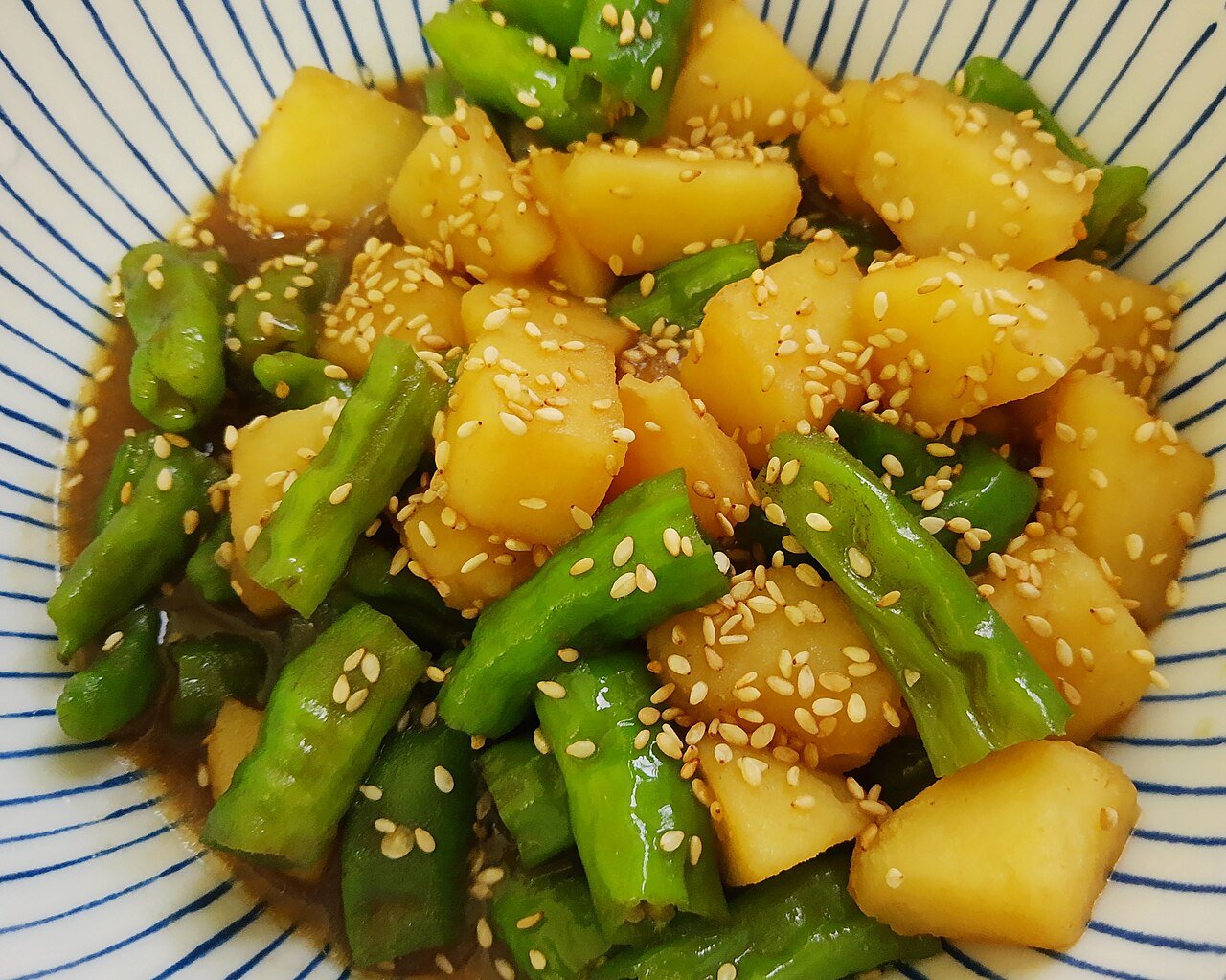
Why you shake the pan instead of stirring it
Cooked potato is soft enough that a spoon dragged through the pan shears the corners right off each piece, and once that starts happening you lose the clean-edged chunks that hold their shape and instead get a pan full of ragged fragments and cloudy, over-thickened sauce. Shaking or tilting the pan moves the potatoes around just as effectively without any point of contact sharp enough to break them. It feels like a small, almost superstitious habit the first few times you do it. It’s really just physics: motion without a cutting edge.
This matters more here than in most braises because potato, unlike meat or tofu, has no outer skin or crust holding it together once peeled and cut — it’s structurally soft all the way through, and every corner is a weak point until it’s fully cooked.
Ingredients and substitutes
| Ingredient | Where to get it, or what to use instead |
|---|---|
| 700 g / 1.5 lb waxy potatoes | Yukon gold holds its shape better than a starchy baking potato like a russet, which tends to fall apart in a braise. Baby potatoes, halved, skip the cutting step since they’re already uniform in size. |
| Rice syrup or corn syrup | Honey diluted with a splash of water works, though it brings its own flavor — more noticeable here than in a spicier braise, since gamja jorim is otherwise fairly plain. |
| Anchovy-kelp broth | Plain water is a fine substitute, just slightly less savory. A dried shiitake simmered briefly in the water is a good vegan upgrade. |
| Green or red chili | A pinch of gochugaru gets you the color and a little heat without the fresh chili’s grassiness. |
| Toasted sesame oil | The dark, toasted bottle only — see the Korean pantry starter kit for why this one is close to non-negotiable across the site. |
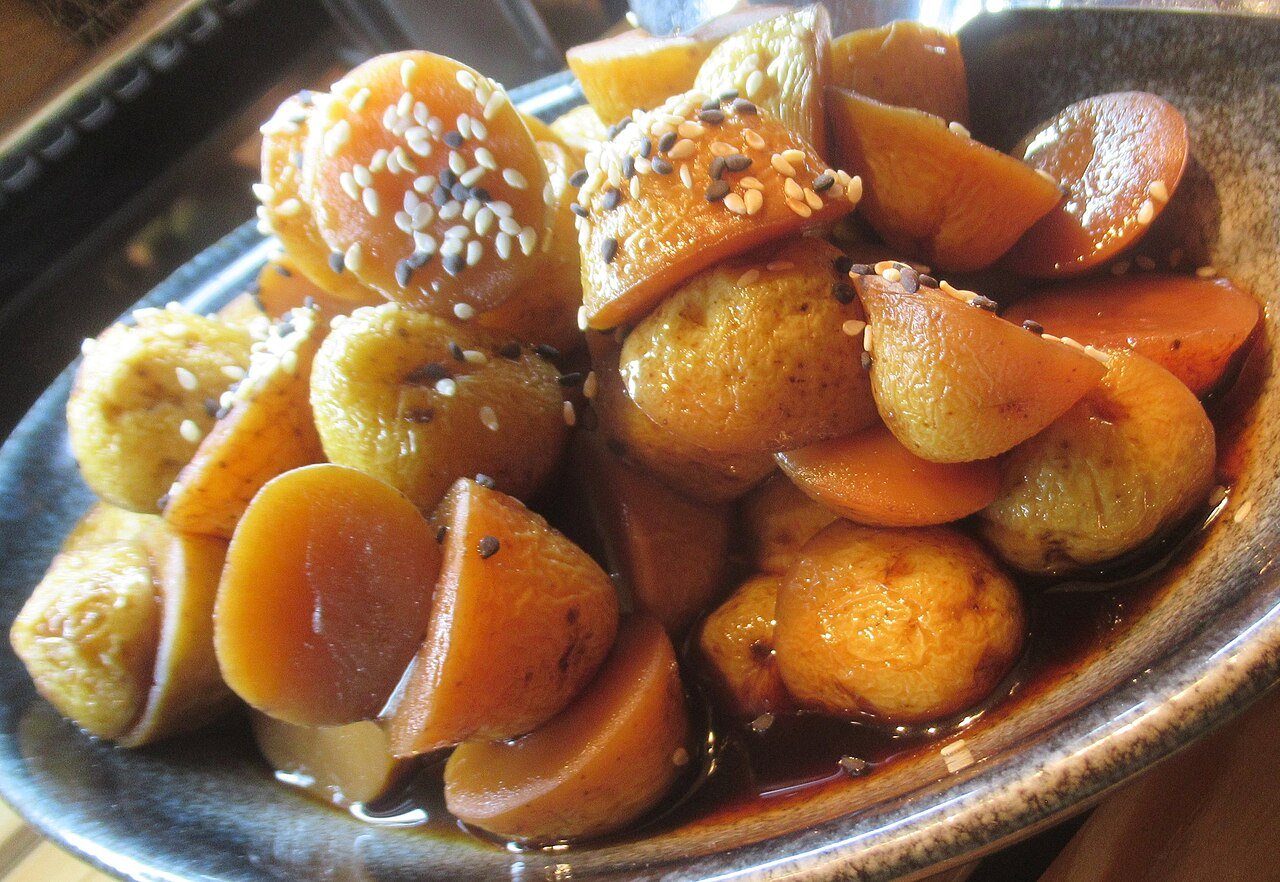
Gamja Jorim Recipe
Ingredients
Method
- Cut the potatoes into uniform chunks and soak them in cold water for 5 minutes to rinse off surface starch.
- Heat oil in a wide, heavy pan and sauté the potatoes 2-3 minutes, turning gently, until the edges look slightly translucent.
- Add soy sauce, sugar, garlic, and water or broth — it should come about halfway up the potatoes.
- Bring to a boil, then reduce to a steady simmer, cover, and cook 12-15 minutes, shaking the pan occasionally instead of stirring with a spoon.
- Uncover once the potatoes are fork-tender and the liquid has reduced to a few tablespoons.
- Add the rice syrup and chili, and continue cooking 2-3 minutes, tilting and shaking the pan to coat every piece — watch closely, since the sauce can scorch quickly once the syrup goes in.
- Finish with sesame oil and sesame seeds off the heat.
Why the syrup goes in last, not at the start
Sugar and rice syrup added early would simmer for the full fifteen minutes alongside everything else, which gives them far more time than they need to caramelize and scorch, especially once most of the water has cooked off. Holding the syrup back until the last two to three minutes — after the potatoes are already fork-tender — means it only has to survive a short, closely watched final reduction, which is exactly the stage this recipe asks you to stay next to the stove for rather than walking away.
Tips and storage
Cut potatoes to a genuinely even size; a wildly mixed batch cooks unevenly, and the smaller pieces will be falling apart while the larger ones are still firm in the center. Soaking cut potatoes in cold water for five minutes before cooking rinses off some of the surface starch, which helps keep the sauce from thickening too aggressively too early.
Gamja jorim keeps 4 to 5 days refrigerated in a sealed container, longer than most of the other banchan in this series, and it travels well cold in a lunch box. It also freezes reasonably well for up to a month, though the potatoes soften slightly on thawing — still fine eaten cold or reheated gently in a pan.
Frequently asked questions
Why did my gamja jorim turn mushy, with the potatoes falling apart?
Almost always stirring with a spoon instead of shaking the pan, or simmering past the point the potatoes were already fork-tender. Check for doneness a couple of minutes earlier than you think you need to, and move the pan by shaking or tilting it rather than reaching in with a utensil.
Can I make gamja jorim without rice syrup?
Yes. Sugar alone, or a diluted spoonful of honey, gets you a passable glaze, though it won’t have quite the same glassy shine rice syrup gives. This is the same tradeoff described in our Korean pantry starter kit: honey’s own flavor is noticeable in a plain braise like this one.
How long does gamja jorim keep, and can I freeze it?
Four to five days refrigerated, and it freezes acceptably for up to a month, with slightly softer potatoes after thawing. It’s one of the more forgiving banchan on this site for make-ahead cooking.
Related
Gamja jorim sits well next to a bowl of kimchi jjigae or doenjang jjigae as part of a standard rice-soup-banchan spread, and it holds up in a lunch box alongside something like bulgogi for a meal that travels. For the other jorim in this pair, dubu jorim uses the same reduction principle on an ingredient that behaves in nearly the opposite way, relying on a fried crust instead of the ingredient’s own starch. And if soy sauce and rice syrup aren’t part of your pantry yet, the Korean pantry starter kit covers what’s worth buying first.